January Roof Leak Season in Brisbane: 9 Signs Your Tile Roof Needs Repointing Before the Next Storm Hits
If you live in Brisbane, you already know January is not just hot. It’s humid, stormy, unpredictable, and brutal on tile roofs.
And here’s the problem.
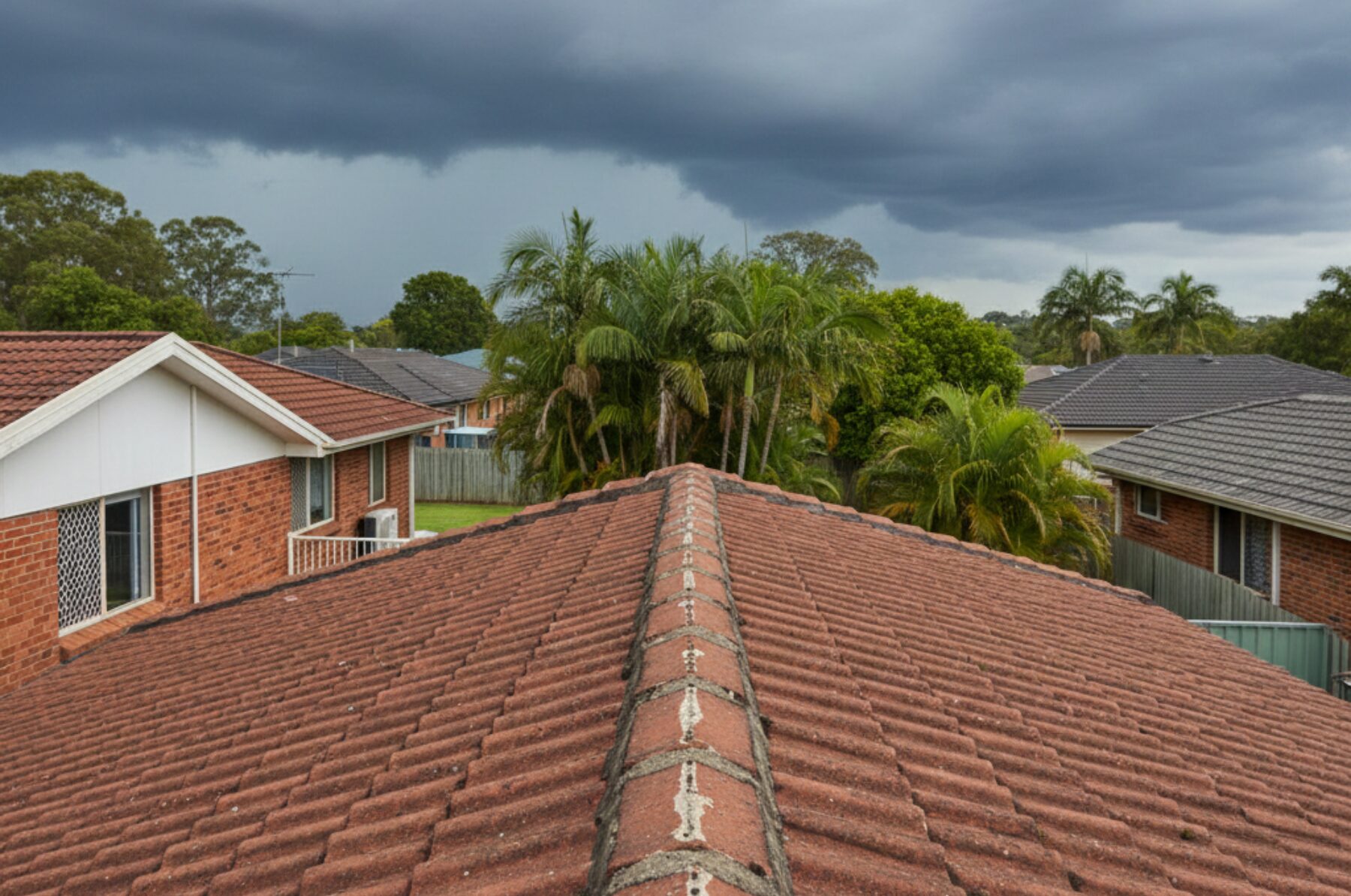
Most tile roof leaks don’t start with a dramatic crack or tiles flying off. They start quietly, with ridge capping mortar slowly breaking down, tiny gaps opening up, and water getting in during the exact moment you least want it.
Usually at 2am. During a storm. When every roofer in Brisbane is booked out for weeks.
If you want to avoid that nightmare, this guide will show you the 9 most common warning signs your tile roof needs repointing before the next summer storm hits.
If you want peace of mind fast, Brisbane Tile Roof Restorations has been protecting Queensland homes since 1981, with a fully qualified team and a spotless reputation for results.
Call us today on 0413 432 014 to request your free quote.
Why January Is the Worst Month for Tile Roof Leaks in Brisbane
January is when Brisbane roofs take the most punishment.
You get:
- Sudden downpours that dump huge amounts of water in minutes
- Hot days that expand tiles and ridge caps
- Cooler storm nights that cause fast contraction
- High humidity that keeps roof materials damp for longer
- Wind-driven rain that pushes water into weak points
Tile roofs are strong, but they rely heavily on the ridge caps staying sealed.
Once the mortar starts to crack or crumble, January storms expose it immediately.
That’s why homeowners often say:
“We had no issues for years, then suddenly we had a leak out of nowhere.”
It wasn’t out of nowhere. It was building quietly for months.
The #1 Reason Ridge Capping Fails After Summer Storms
The number one reason ridge capping fails is simple.
The pointing becomes brittle and cracks.
Traditional mortar pointing does not flex well as the roof moves through heat, wind, and rain. Over time, that mortar breaks down, creating tiny gaps.
And in Brisbane, those gaps become leak points fast.
Once water gets under ridge caps, it can:
- Soak the bedding mortar
- Shift ridge tiles slightly
- Let water track into the roof cavity
- Create ceiling stains and damp insulation
- Trigger mould smells and internal damage
This is exactly why professional roof repointing is one of the most effective long-term leak prevention services for tile roofs.
Sign #1–3: Cracked Pointing, Loose Ridge Caps & Missing Mortar
These are the three most obvious external signs that your ridge capping is failing.
Sign #1: Cracked pointing along ridge caps
If you can see cracking along the ridge line, the seal is already compromised.
Even small cracks matter, because storm water gets forced into them under pressure.
Sign #2: Loose ridge caps
If ridge caps move even slightly, that is a serious warning sign.
Loose ridge caps mean the bedding underneath is failing, and the roof is no longer sealed properly.
Sign #3: Missing mortar
If pieces of mortar are missing, your roof is exposed.
This often happens after storms, or after years of sun damage and thermal movement.
If you notice any of these signs, it is usually time to book a roof inspection before the next major storm arrives.
Sign #4–6: Water Stains, Ceiling Dampness & That “Storm Smell” Indoors
These are the signs homeowners often notice first, because they appear inside.
Sign #4: Water stains on ceilings
A ceiling stain is not just cosmetic. It is proof that water is already entering the roof space.
The longer it continues, the more likely you’ll face damaged plaster, insulation, and framing.
Sign #5: Dampness after rain
If a room feels damp after storms, especially near the ceiling, it can indicate a slow leak that’s soaking insulation.
This is common in older Brisbane homes with tile roofs.
Sign #6: That “storm smell” indoors
If you notice a musty, earthy smell after heavy rain, trust your instincts.
That smell is a red flag for moisture sitting in the roof cavity.
Many homeowners assume it’s “just humidity.”
But often, it’s a roof leak that has been present longer than you think.
Sign #7–9: Tile Movement, Hairline Cracks & Ridge Caps That Shift Underfoot
These are the signs that show your roof is under stress structurally.
Sign #7: Tile movement
If tiles look uneven or shifted, water can enter through laps and gaps.
Tile movement can also be a sign ridge caps are no longer stabilising the roof properly.
Sign #8: Hairline cracks in tiles
Hairline cracks are sneaky.
They might not leak every time it rains, but during heavy January storms they often become active leak points.
Sign #9: Ridge caps that shift underfoot
If someone walks the roof and ridge caps feel unstable, that is a major sign the bedding and pointing are failing.
This is not something to ignore.
A shifting ridge cap can eventually lift, crack further, and create a much larger leak risk.
Repointing vs Patch Repairs: What Actually Stops Leaks Long-Term?
A lot of Brisbane homeowners get stuck in the patch-repair cycle.
A small leak appears, someone patches a section, and it seems fine for a while.
Then the next storm hits and it leaks again.
Here’s the truth.
Patch repairs can work when:
- The roof is otherwise in good condition
- The issue is isolated to one cracked tile
- Ridge caps are still firmly bedded and sealed
Repointing is the better long-term solution when:
- Ridge cap mortar is cracking across multiple sections
- Ridge caps are loose or shifting
- Water is tracking into the roof cavity
- The roof is ageing and exposed to regular storms
Repointing replaces deteriorated mortar with a professional flexible pointing system designed to handle roof movement.
It is one of the most effective ways to:
- Stop leaks
- Prevent ridge cap movement
- Protect your roof structure
- Extend the life of your tile roof
And it often costs far less than the repairs you’ll face if leaks continue.
How Fast Roof Leaks Turn Into Expensive Structural Damage (Brisbane Homes)
This is the part homeowners rarely see until it’s too late.
Because water does not just “drip.”
It spreads.
A small roof leak can quickly lead to:
- Rotten timber battens
- Damp insulation that stops working
- Mould growth in the roof cavity
- Damaged plaster ceilings
- Warped framing
- Electrical risks if moisture reaches wiring
And in Brisbane, once moisture gets trapped in the roof space, it can stay there for a long time because of humidity.
That’s why even a “minor” leak can become expensive surprisingly fast.
Fixing it early is almost always the smartest and cheapest decision.
When to Book a Roof Inspection (Before You’re Stuck Waiting After a Storm)
If you wait until after a major storm, you are competing with every other homeowner in Brisbane who suddenly discovered a leak.
That is when wait times blow out.
The best time to book a roof inspection is:
- Before January storms peak
- As soon as you notice any of the 9 warning signs
- If your roof is older and has never been repointed
- If you have had even one ceiling stain or damp smell
- Before you list your home for sale
- Before the next storm season ramps up
At Brisbane Tile Roof Restorations, our inspections are thorough and honest.
We safely access your roof, check ridge tiles, bedding and pointing, identify cracked or shifted tiles, and explain everything clearly in plain terms.
No confusion. No surprises. No hidden extras.
Ready to Stop the Next Roof Leak Before It Starts?
If you’ve spotted even one of the signs above, it’s worth getting your roof checked now.
Brisbane Tile Roof Restorations is a family business operating in Queensland since 1981, specialising in:
- Tile roof repairs
- Tile roof restorations
- Professional roof repointing
- Ridge cap bedding and pointing
We work exclusively with tile roofs, and we’re proud to say we’ve never been beaten by a roof leak.
Call Brisbane Tile Roof Restorations on 0413 432 014 or request your free quote today.
Because the best time to fix a roof leak is before the storm hits.


About Post Author
