Repointing vs Rebedding: Brisbane Tile Roof Repairs Explained
Look up at the peak of a tiled roof and you’ll see a row of curved ridge caps along the top. They look simple, but they sit on layers of mortar and pointing, and those layers keep water out of your roof cavity.
When those layers wear out, a roofer will usually recommend one of two repairs: repointing or rebedding. The terms sound similar, and quotes often mention both, so many Brisbane homeowners aren’t sure what they’re paying for or whether they need both.
This guide explains repointing vs rebedding in plain terms. It covers what each repair involves, the warning signs to look for, why Brisbane’s climate speeds up the wear, and how to avoid a common mistake that leaves homeowners paying twice.
What Is Roof Repointing and What Does It Fix?
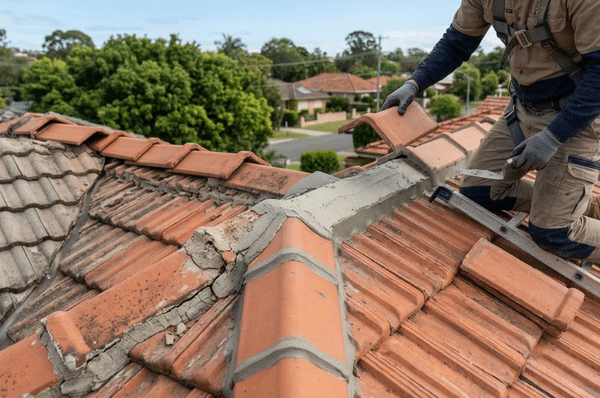
Pointing is the visible finishing layer that runs along the edges of your ridge caps and hip tiles. It seals the gap between the caps and the tiles below, and it holds the caps firmly in place.
Older roofs typically used a cement-based pointing, which becomes brittle and cracks over time. Modern repointing usually uses a flexible pointing compound. It bonds strongly and moves slightly with the roof as it expands and contracts.
Repointing involves:
- Removing loose, cracked or flaking pointing
- Cleaning and preparing the surface
- Applying a fresh layer of flexible pointing over the existing bedding
- Tooling it to a neat, weatherproof finish
Repointing fixes:
- Hairline and surface cracks in the pointing
- Small gaps where wind-driven rain can get in
- Weathered, patchy pointing that no longer seals properly
- A tired-looking roofline
Repointing is the right repair when the bedding underneath is still solid. It restores the protective outer layer without disturbing the ridge caps.
What Is Roof Rebedding and When Is It Needed?
Bedding is the mortar underneath each ridge cap. It’s the foundation that anchors the caps to the roof and fills the space between the caps and the tiles below.
Traditional bedding is a mix of sand and cement. Over the years, heat, moisture and roof movement break it down until it crumbles, cracks or comes away from the tiles. At that point, fresh pointing has nothing solid to grip, and the caps can shift or lift.
Rebedding involves:
- Carefully removing the ridge caps
- Chipping away and clearing out the old, failed bedding
- Laying fresh bedding mortar
- Resetting each ridge cap in the correct alignment
- Finishing with new flexible pointing over the top
Rebedding is needed when:
- Ridge caps are loose, rocking or visibly out of line
- Bedding mortar is crumbling or has fallen away in sections
- Storm damage has dislodged ridge caps
- Pointing keeps cracking soon after it’s been done
- Water is getting in along the ridge or hip lines
In short, rebedding rebuilds the foundation, and repointing finishes it off. That’s why rebedding almost always includes repointing as its final step.
Repointing vs Rebedding: The Key Differences Side by Side
Here’s how the two repairs compare:
| Repointing | Rebedding | |
|---|---|---|
| What it treats | The outer pointing layer | The bedding mortar beneath the ridge caps |
| Are ridge caps removed? | No | Yes |
| Best for | Cracked or weathered pointing over sound bedding | Crumbling bedding, loose or misaligned caps |
| Scope of work | Lighter, surface-level repair | Full rebuild of the ridge line |
| Includes the other repair? | No | Yes, finishes with repointing |
| Typical time frame | Often completed quickly | Usually takes longer, depending on roof size |
| Relative cost | Lower | Higher |
A simple way to remember it: repointing seals, rebedding rebuilds.
Many roofs need a combination. For example, a home might have solid bedding along most of its ridges but a few badly failed sections on a hip exposed to the weather. In that case, a roofer might rebed those sections and repoint the rest.
Signs Your Brisbane Tile Roof Needs Repointing or Rebedding
You don’t need to climb onto your roof to spot most early warning signs. A pair of binoculars from the yard or a look through an upstairs window is often enough. Please leave the climbing to the professionals, because tile roofs are fragile and slippery.
Signs that point to repointing:
- Fine cracks running along the pointing
- Pointing that looks patchy, faded or flaky
- Small chunks of pointing on the ground or in your gutters
- Minor gaps between ridge caps and tiles
Signs that point to rebedding:
- Ridge caps that look crooked, lifted or out of line
- Visible gaps under the caps where the bedding has fallen away
- Sand or mortar debris collecting in gutters and valleys
- Caps that moved or blew off during a storm
Signs inside your home:
- Water stains on ceilings, especially near the top of the house
- Damp or musty smells in upper rooms
- Leaks that appear during heavy or wind-driven rain
Remember that water often travels across the roof cavity before it shows up inside. A stain in the hallway could come from a failed ridge cap several metres away, which is why a proper inspection matters.
Why Brisbane’s Climate Wears Out Ridge Cap Bedding and Pointing
Tile roofs are built to last, but South East Queensland puts them through a lot. Several local conditions combine to speed up ridge cap deterioration.
- Intense heat and daily temperature swings: Roof surfaces heat up quickly under Brisbane’s summer sun and cool at night. That constant expansion and contraction stresses rigid mortar until it cracks.
- Relentless UV exposure: UV breaks down roofing materials over time, leaving older pointing brittle and chalky.
- Humidity and moisture: Damp conditions allow moisture to soak into porous bedding, weakening it from the inside.
- Summer storms: Brisbane’s storm season brings strong winds, heavy downpours and sometimes hail. Wind can lift loose caps, and driving rain finds every weak point along the ridges.
- Roof movement: Houses naturally settle, and timber frames shift slightly with changes in moisture and temperature. Rigid cement mortar can’t flex with that movement.
This is why flexible pointing has become the standard for good-quality ridge cap repairs in Brisbane. It handles movement and temperature changes far better than the old cement pointing.
How a Roof Inspection Decides Between Repointing and Rebedding
You can’t tell whether a roof needs repointing or rebedding from the ground. The pointing might look fine while the bedding underneath has already failed. Or the pointing might look rough while the bedding beneath is still perfectly sound.
During a thorough tile roof inspection, a specialist will:
- Check whether ridge and hip caps are firm or loose to the touch
- Inspect pointing for cracks, gaps and poor adhesion
- Examine visible bedding for crumbling, voids or separation
- Look for broken, cracked or slipped tiles near the ridges
- Check valleys, flashings and roof penetrations for related problems
- Trace any water entry points linked to leaks inside the home
The result should be clear advice on which repair each section of your roof needs, along with an obligation-free quote. A good roofer will explain their findings and show you photos where possible, so you understand what you’re paying for.
The Rebedding and Repointing Process, Step by Step
If your inspection shows that rebedding is needed, here’s what a quality job typically looks like:
- Safety setup: The crew sets up proper safety equipment and access before working at height.
- Ridge cap removal: Caps are lifted carefully and set aside for reuse. Any broken caps are identified for replacement.
- Removing old bedding: Failed mortar is chipped away and cleared from the tiles.
- Cleaning the area: Dust and debris are removed so the new bedding bonds properly.
- Laying new bedding: Fresh mortar is laid along the ridge and hip lines.
- Resetting the caps: Each cap is placed into the new bedding and aligned to create a straight, even roofline.
- Applying flexible pointing: Pointing is applied over the bedding and tooled to a neat, watertight finish.
- Final check and clean-up: The roof is inspected, gutters are cleared of debris and the site is left tidy.
For a repointing-only job, the process skips the removal and rebedding steps. It focuses on preparing the existing surface and applying new pointing.
The Costly Mistake of Repointing Over Failed Bedding
This is the most important section for anyone comparing quotes.
Some operators offer a cheap “repoint only” job even when the bedding underneath is crumbling. Fresh pointing makes the roof look like new and the quote looks attractive. The problem is that pointing can only be as strong as what it’s sitting on.
When new pointing is applied over failed bedding:
- The caps can still move, so the new pointing cracks, sometimes within months
- Water keeps getting in through voids hidden underneath
- The underlying problem gets worse while looking fixed from the outside
- You end up paying for the job twice, once for the quick fix and again for proper rebedding
There’s also an insurance angle. Insurers often class damage caused by long-term wear as avoidable deterioration rather than sudden damage. A roof that has been patched over instead of properly repaired can weaken your position if you ever need to make a claim.
Tip: If a quote recommends repointing only, ask the roofer how they checked the bedding underneath. A specialist should be able to explain exactly why the bedding is sound.
What Affects the Cost of Repointing and Rebedding in Brisbane
Every roof is different, so a reputable roofer will quote only after an inspection. These are the main factors that influence the price:
- Scope of work: Repointing alone costs less than a full rebed and repoint.
- Length of ridges and hips: Pricing is often based on the linear metres of ridge and hip capping involved.
- Roof pitch and height: Steep or two-storey roofs need more safety equipment and take longer to work on.
- Access: Tight blocks, landscaping or difficult access points can add time.
- Condition of the caps: Broken or missing ridge caps need to be replaced, and matching older tiles can take extra effort.
- Additional repairs: Cracked tiles, valley issues or flashing problems found during the inspection may be added to the job.
- Tile type: Concrete and terracotta tiles have different handling requirements.
- Materials: Premium flexible pointing and quality mortar cost more up front but last much longer.
The cheapest quote isn’t always the best value. A proper repair that lasts a decade usually costs far less over time than a quick patch you have to redo in two years.
Choosing a Tile Roof Specialist for Ridge Cap Repairs in Brisbane
Ridge cap work looks straightforward, but it rewards experience. When comparing roofers, look for:
- Tile roof specialisation: A roofer who works only on concrete and terracotta tiles knows how they fail and how to fix them properly.
- Current licensing: Check that your roofer holds a QBCC licence.
- A thorough inspection before quoting: Be wary of anyone who quotes without getting on the roof.
- Clear, honest advice: They should explain whether you need repointing, rebedding or both, and why.
- Quality materials: Ask which pointing and mortar products they use.
- A solid warranty: Longer warranties show confidence in the workmanship.
Brisbane Tile Roof Restorations has more than 40 years of experience working exclusively on tile roofs. Our fully licensed team (BSA 736 636 / 736 635) inspects every roof before quoting and uses premium materials from trusted brands. Every job is backed by a 10-year workmanship warranty.
Our work has earned the trust of homeowners, builders and industry partners, including BUILD urban renewal projects and Liberty Homes suburban refurbishment programs across South East Queensland.
Protect Your Roofline Before the Next Storm
The choice between repointing and rebedding comes down to what’s happening beneath the surface.
- Repointing renews the outer seal when the bedding is still sound.
- Rebedding rebuilds the foundation when the mortar under your ridge caps has failed.
- Brisbane’s heat, UV, humidity and storms speed up the wear on both layers.
- An inspection is the only reliable way to know which repair your roof needs.
- Repointing over failed bedding is a false economy that often leads to repeat leaks.
If you’ve noticed cracked pointing, loose ridge caps or mortar in your gutters, get your roof inspected before storm season arrives. Contact Brisbane Tile Roof Restorations today for a thorough inspection and an obligation-free quote from Brisbane’s tile roof specialists.


About Post Author
